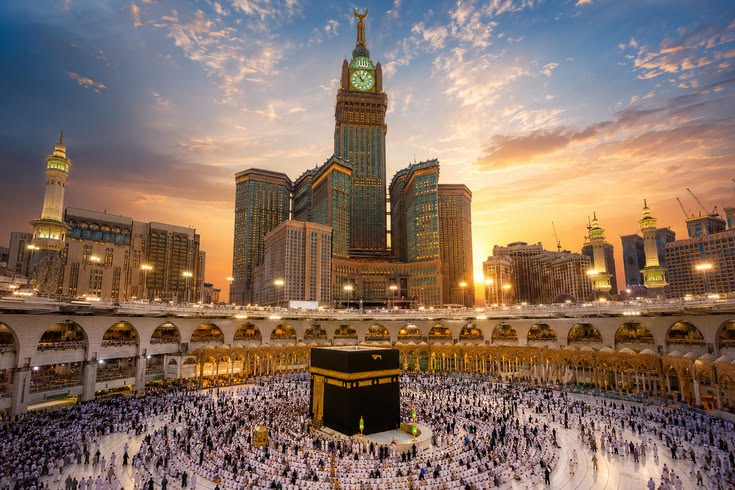
If this is your first Umrah, most of the nervousness comes from not knowing what actually happens, in what order. Here's the trip laid out plainly, from the moment you book to the moment you're back home.
1. Before you fly: ihram and intention
Ihram is both a state and an outfit. Men typically wear two unstitched white sheets; women wear modest, loose clothing that covers everything except the face and hands, in whatever color they prefer. You enter the state of ihram at a designated boundary point called a miqat — for most flights from Pakistan, this is either before boarding or announced on the plane as you approach the boundary.
Before entering ihram, it's customary to shower, trim nails, and apply unscented care beforehand (perfume is avoided once in ihram). Then you make the intention (niyyah) for Umrah and begin reciting the talbiyah.
2. Arrival in Makkah
Once you land and reach your hotel, most pilgrims rest briefly before heading to Masjid al-Haram. There's no strict rule on timing — some go straight from the airport, others rest first. Either is fine.
3. Tawaf: circling the Kaaba
Tawaf means walking around the Kaaba seven times, starting and ending at the corner with the Black Stone (Hajar al-Aswad). You don't need to touch or kiss it — a gesture toward it from a distance is enough, especially when it's crowded. Move with the flow of the crowd rather than against it, and keep your belongings close.
After tawaf, it's customary to pray two short rak'ahs near Maqam Ibrahim if space allows, or anywhere else in the mosque if it's too crowded there.
4. Sa'i: walking between Safa and Marwa
Next is sa'i — walking back and forth seven times between the hills of Safa and Marwa, which are now enclosed within the mosque as a long, air-conditioned corridor. There are wheelchair lanes for anyone who needs them, and the distance is very walkable for most people.
5. Finishing: hair cutting
Umrah ends with cutting the hair. Men either trim their hair all over or shave it completely (shaving is considered more virtuous). Women cut a small, symbolic amount, roughly a fingertip's length, from the ends of their hair. Once this is done, you exit the state of ihram and normal restrictions no longer apply.
Practical things people wish they knew earlier
- Timing matters. Tawaf and sa'i are far less crowded late at night or just after Fajr than during peak evening hours.
- Wear comfortable, broken-in shoes. You'll be on your feet for hours, and hotel-to-mosque walks add up quickly.
- Keep a printed or photographed copy of your visa and passport separate from the originals, in case anything gets misplaced.
- Madinah is usually paired with the trip. Most packages include a few days in Madinah to visit the Prophet's Mosque, though it isn't a requirement of Umrah itself.
What we handle for you
A Khaleej Travels Umrah package covers your visa processing, flights, and hotel bookings near the Haramain, so the only thing left to plan is what you'll bring. If you want the exact steps explained in person before you go, our team walks every group through this before departure.